Buy bpositive.eu ?
We are moving the project
bpositive.eu .
Are you interested in purchasing the domain
bpositive.eu ?
domain@kv-gmbh.de · 0541-91531010
Buy bpositive.eu ?
What are alcohols?
Alcohols are a class of organic compounds that contain a hydroxyl group (-OH) attached to a carbon atom. They are characterized by their ability to dissolve in water and their distinct smell and taste. Alcohols can be classified based on the number of carbon atoms bonded to the carbon atom with the hydroxyl group, such as methanol, ethanol, and isopropanol. They are commonly used as solvents, disinfectants, and in alcoholic beverages. **
Are polyhydric alcohols the same as, for example, secondary alcohols?
No, polyhydric alcohols and secondary alcohols are not the same. Polyhydric alcohols are alcohols that contain more than one hydroxyl (-OH) group in their structure, such as glycerol or ethylene glycol. Secondary alcohols, on the other hand, are a specific type of alcohol where the carbon atom bearing the hydroxyl group is bonded to two other carbon atoms. Examples of secondary alcohols include isopropanol and 2-butanol. Therefore, while polyhydric alcohols refer to the presence of multiple hydroxyl groups, secondary alcohols refer to the specific structure of the carbon atom bonded to the hydroxyl group. **


Similar search terms for Sugar alcohols
Top-Angebote
Products related to Sugar alcohols:
-
Tree Hut Shea Sugar Scrub Moonlight Glow sugar body scrub 510 gTree Hut Shea Sugar Scrub Moonlight Glow, 510 g, Body Scrubs for Women, The Tree Hut Shea Sugar Scrub body scrub rids your skin of dead skin cells and makes it perfectly smooth. Characteristics: removes dead skin cells hydrates and nourishes the skin exfoliating effect protects skin from dehydration leaves the skin soft and supple has a pleasant fragrance has a soothing effect Ingredients: shea butter – nourishes, helps retain necessary hydration in skin, adds softness and smoothness, provides protection against drying and harmful external influences almond oil – nourishes, helps lock water in skin and keep it hydrated, softens rough textures and uneven skin, helps prevent flaking and irritation avocado oil – softens, provides hydration, nourishment and smoothness, promotes a youthful appearance of skin, has antioxidant effects How to use: Moisten the skin and massage using gentle circular movements. Then rinse thoroughly.8,72 £*Shipping: 3,99 £Secure redirect to the provider
-
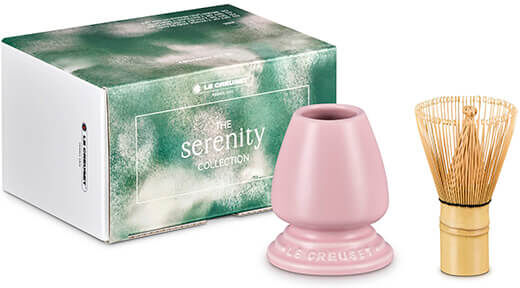
Le Creuset Stoneware Serenity Matte Sugar Pink Matcha Whisk & StandBring a touch of tradition to your matcha ritual with the Le Creuset Matcha Whisk Stand Set in Sugar Pink. Combining a beautifully crafted stoneware whisk stand with a traditional bamboo matcha whisk, this elegant set is designed to support the preparation and care of authentic matcha tea. The stoneware stand helps maintain the shape of the whisk between uses, encouraging faster drying and prolonging its lifespan, while adding a stylish accent to your tea collection. Finished in a soft Sugar Pink hue, it blends contemporary design with timeless functionality. Crafted from premium Le Creuset stoneware, the stand is durable, easy to clean and resistant to everyday wear. Ideal for dedicated matcha enthusiasts and those new to tea ceremonies alike, this set makes a thoughtful gift or a refined addition to your own kitchen. Supplied with a 10-Year Le Creuset Guarantee for lasting peace of mind.36,00 £*Shipping: 3,50 £Secure redirect to the provider
-
Tree Hut Ocean Glow Sugar Scrub 510 grHealth and Beauty Scrubs and Peels Tree Hut Ocean Glow Sugar Scrub 510 gr What is Ocean Glow Sugar Scrub 510g? It's Tree Hut's Ocean Glow Body Scrub, a sugar scrub with shea butter inspired by the sea. It combines sugar crystals, which polish the skin, with marine-derived ingredients and a fresh fragrance reminiscent of an ocean breeze. It comes in a large jar for use in the shower. Benefits Sugar exfoliates dead skin cells, leaving skin smoother to the touch, while the massage stimulates circulation and restores a radiant glow. The formula includes hyaluronic acid and two algae extracts, chlorella and rainbow algae, which help skin feel hydrated and supple after rinsing. Shea butter and a blend of avocado, macadamia, sweet almond, evening primrose, safflower, and orange oils leave a light film that prevents that tight feeling after showering. It contains perfume and nut oils (sweet almond and macadamia), so keep that in mind if you have an allergy to them. Who is it for? For those who notice rough or dull skin on their body, with rough areas on elbows, knees or heels, and are looking for an exfoliant that also leaves it moisturized and with a fresh and clean smell. How to apply Ocean Glow Sugar Scrub 510g? Take a generous amount and spread it over damp or dry skin . Massage with circular movements, paying particular attention to the roughest areas. Rinse well with warm water and dry gently. Product use For external use on the skin of the body. Do not apply to the face or to irritated, recently shaved, or broken skin. Oils can leave the shower tray slippery: rinse it afterward. To prolong the feeling of soft skin, you can follow with the soufflé body butter from the same collection.12,85 £*Shipping: 4,99 £Secure redirect to the provider


-
What are monohydric alcohols?
Monohydric alcohols are organic compounds that contain a single hydroxyl (-OH) group attached to a carbon atom. They are also known as primary alcohols. Monohydric alcohols can be found in various natural sources such as fruits, vegetables, and grains, and are also commonly used in the production of alcoholic beverages, solvents, and as fuel additives. Examples of monohydric alcohols include methanol, ethanol, and propanol. **
-
Are all alcohols lipophilic?
Yes, all alcohols are lipophilic, meaning they are attracted to and soluble in lipids or fats. This is because alcohols have a hydrophobic (water-repelling) portion, which allows them to interact with and dissolve in non-polar substances like lipids. This property makes alcohols useful in a variety of applications, including as solvents in the pharmaceutical and cosmetic industries. **
-
What are alcohols in chemistry?
Alcohols are a class of organic compounds that contain a hydroxyl (-OH) functional group, which is a combination of a hydrogen atom and an oxygen atom bonded to a carbon atom. They are characterized by their ability to dissolve in water and their ability to undergo reactions such as oxidation and esterification. Alcohols can be classified as primary, secondary, or tertiary based on the number of carbon atoms bonded to the carbon atom bearing the hydroxyl group. They are commonly used as solvents, disinfectants, and in the production of various chemicals and consumer products. **
-
Which alcohols can you drink?
You can drink alcohols that are safe for human consumption, such as beer, wine, and spirits. It's important to drink responsibly and in moderation, and to be aware of your own tolerance and any potential health risks. It's also important to be of legal drinking age in your country or region. Always consult with a healthcare professional if you have any concerns about alcohol consumption. **


'It's about alcohols in chemistry.'
Alcohols are a class of organic compounds that contain a hydroxyl group (-OH) bonded to a carbon atom. They are commonly used as solvents, disinfectants, and in the production of various chemicals. Alcohols can be classified as primary, secondary, or tertiary based on the number of carbon atoms bonded to the carbon atom bearing the hydroxyl group. They also undergo various chemical reactions, such as oxidation to form aldehydes or ketones, and esterification to form esters. **
Why are primary and secondary alcohols not as reactive as tertiary alcohols in SN1 reactions?
Primary and secondary alcohols are not as reactive as tertiary alcohols in SN1 reactions because the rate-determining step in SN1 reactions involves the formation of a carbocation intermediate. Tertiary alcohols form more stable carbocation intermediates due to the presence of more alkyl groups, which stabilize the positive charge through hyperconjugation and inductive effects. In contrast, primary and secondary alcohols form less stable carbocation intermediates, making the reaction less favorable. As a result, tertiary alcohols undergo SN1 reactions more readily than primary and secondary alcohols. **
Top-Angebote
Products related to Sugar alcohols:
-
Tree Hut Shea Sugar Scrub Ocean Glow sugar body scrub 510 gTree Hut Shea Sugar Scrub Ocean Glow, 510 g, Body Scrubs for Women, The Tree Hut Shea Sugar Scrub body scrub rids your skin of dead skin cells and makes it perfectly smooth. Characteristics: removes dead skin cells hydrates and nourishes the skin exfoliating effect protects skin from dehydration leaves the skin soft and supple has a pleasant fragrance Ingredients: hyaluronic acid – binds large quantities of water and hydrates intensively shea butter – nourishes, helps retain necessary hydration in skin, adds softness and smoothness, provides protection against drying and harmful external influences almond oil – nourishes, helps lock water in skin and keep it hydrated, softens rough textures and uneven skin, helps prevent flaking and irritation avocado oil – softens, provides hydration, nourishment and smoothness, promotes a youthful appearance of skin, has antioxidant effects How to use: Moisten the skin and massage using gentle circular movements. Then rinse thoroughly.8,80 £*Shipping: 3,99 £Secure redirect to the provider
-
Tree Hut Shea Sugar Scrub Moonlight Glow sugar body scrub 510 gTree Hut Shea Sugar Scrub Moonlight Glow, 510 g, Body Scrubs for Women, The Tree Hut Shea Sugar Scrub body scrub rids your skin of dead skin cells and makes it perfectly smooth. Characteristics: removes dead skin cells hydrates and nourishes the skin exfoliating effect protects skin from dehydration leaves the skin soft and supple has a pleasant fragrance has a soothing effect Ingredients: shea butter – nourishes, helps retain necessary hydration in skin, adds softness and smoothness, provides protection against drying and harmful external influences almond oil – nourishes, helps lock water in skin and keep it hydrated, softens rough textures and uneven skin, helps prevent flaking and irritation avocado oil – softens, provides hydration, nourishment and smoothness, promotes a youthful appearance of skin, has antioxidant effects How to use: Moisten the skin and massage using gentle circular movements. Then rinse thoroughly.8,72 £*Shipping: 3,99 £Secure redirect to the provider
-
What are alcohols?
Alcohols are a class of organic compounds that contain a hydroxyl group (-OH) attached to a carbon atom. They are characterized by their ability to dissolve in water and their distinct smell and taste. Alcohols can be classified based on the number of carbon atoms bonded to the carbon atom with the hydroxyl group, such as methanol, ethanol, and isopropanol. They are commonly used as solvents, disinfectants, and in alcoholic beverages. **
-
Are polyhydric alcohols the same as, for example, secondary alcohols?
No, polyhydric alcohols and secondary alcohols are not the same. Polyhydric alcohols are alcohols that contain more than one hydroxyl (-OH) group in their structure, such as glycerol or ethylene glycol. Secondary alcohols, on the other hand, are a specific type of alcohol where the carbon atom bearing the hydroxyl group is bonded to two other carbon atoms. Examples of secondary alcohols include isopropanol and 2-butanol. Therefore, while polyhydric alcohols refer to the presence of multiple hydroxyl groups, secondary alcohols refer to the specific structure of the carbon atom bonded to the hydroxyl group. **
-
What are monohydric alcohols?
Monohydric alcohols are organic compounds that contain a single hydroxyl (-OH) group attached to a carbon atom. They are also known as primary alcohols. Monohydric alcohols can be found in various natural sources such as fruits, vegetables, and grains, and are also commonly used in the production of alcoholic beverages, solvents, and as fuel additives. Examples of monohydric alcohols include methanol, ethanol, and propanol. **
-
Are all alcohols lipophilic?
Yes, all alcohols are lipophilic, meaning they are attracted to and soluble in lipids or fats. This is because alcohols have a hydrophobic (water-repelling) portion, which allows them to interact with and dissolve in non-polar substances like lipids. This property makes alcohols useful in a variety of applications, including as solvents in the pharmaceutical and cosmetic industries. **
Similar search terms for Sugar alcohols
-
Le Creuset Stoneware Serenity Matte Sugar Pink Matcha Whisk & StandBring a touch of tradition to your matcha ritual with the Le Creuset Matcha Whisk Stand Set in Sugar Pink. Combining a beautifully crafted stoneware whisk stand with a traditional bamboo matcha whisk, this elegant set is designed to support the preparation and care of authentic matcha tea. The stoneware stand helps maintain the shape of the whisk between uses, encouraging faster drying and prolonging its lifespan, while adding a stylish accent to your tea collection. Finished in a soft Sugar Pink hue, it blends contemporary design with timeless functionality. Crafted from premium Le Creuset stoneware, the stand is durable, easy to clean and resistant to everyday wear. Ideal for dedicated matcha enthusiasts and those new to tea ceremonies alike, this set makes a thoughtful gift or a refined addition to your own kitchen. Supplied with a 10-Year Le Creuset Guarantee for lasting peace of mind.36,00 £*Shipping: 3,50 £Secure redirect to the provider
-
Tree Hut Ocean Glow Sugar Scrub 510 grHealth and Beauty Scrubs and Peels Tree Hut Ocean Glow Sugar Scrub 510 gr What is Ocean Glow Sugar Scrub 510g? It's Tree Hut's Ocean Glow Body Scrub, a sugar scrub with shea butter inspired by the sea. It combines sugar crystals, which polish the skin, with marine-derived ingredients and a fresh fragrance reminiscent of an ocean breeze. It comes in a large jar for use in the shower. Benefits Sugar exfoliates dead skin cells, leaving skin smoother to the touch, while the massage stimulates circulation and restores a radiant glow. The formula includes hyaluronic acid and two algae extracts, chlorella and rainbow algae, which help skin feel hydrated and supple after rinsing. Shea butter and a blend of avocado, macadamia, sweet almond, evening primrose, safflower, and orange oils leave a light film that prevents that tight feeling after showering. It contains perfume and nut oils (sweet almond and macadamia), so keep that in mind if you have an allergy to them. Who is it for? For those who notice rough or dull skin on their body, with rough areas on elbows, knees or heels, and are looking for an exfoliant that also leaves it moisturized and with a fresh and clean smell. How to apply Ocean Glow Sugar Scrub 510g? Take a generous amount and spread it over damp or dry skin . Massage with circular movements, paying particular attention to the roughest areas. Rinse well with warm water and dry gently. Product use For external use on the skin of the body. Do not apply to the face or to irritated, recently shaved, or broken skin. Oils can leave the shower tray slippery: rinse it afterward. To prolong the feeling of soft skin, you can follow with the soufflé body butter from the same collection.12,85 £*Shipping: 4,99 £Secure redirect to the provider
-
Le Creuset Serenity Collection Stoneware 440ml Sphere Milk Jug - Sugar PinkLe Creuset presents the Stoneware Sphere Milk Jug in Sugar Pink as part of their Serenity Collection. Designed with a gently curved form and soft, matte finish, this versatile jug adds a refined touch to coffee and breakfast tables. Made from robust, high-quality stoneware, it is designed for everyday use while bringing the distinctive style and craftsmanship of Le Creuset to your table. Product Features Serenity Collection Milk Jug - Sugar Pink Made from stoneware and fired at high temperatures for durability Enamelled finish helps to prevent scratches, stains and odours Attractive sphere shape that is comfortable to hold Ideal for breakfast time and afternoon tea Other colours and products are available in this range by Le Creuset Dishwasher safe 10-year guarantee26,00 £*Shipping: 4,99 £Secure redirect to the provider
-
What are alcohols in chemistry?
Alcohols are a class of organic compounds that contain a hydroxyl (-OH) functional group, which is a combination of a hydrogen atom and an oxygen atom bonded to a carbon atom. They are characterized by their ability to dissolve in water and their ability to undergo reactions such as oxidation and esterification. Alcohols can be classified as primary, secondary, or tertiary based on the number of carbon atoms bonded to the carbon atom bearing the hydroxyl group. They are commonly used as solvents, disinfectants, and in the production of various chemicals and consumer products. **
-
Which alcohols can you drink?
You can drink alcohols that are safe for human consumption, such as beer, wine, and spirits. It's important to drink responsibly and in moderation, and to be aware of your own tolerance and any potential health risks. It's also important to be of legal drinking age in your country or region. Always consult with a healthcare professional if you have any concerns about alcohol consumption. **
-
'It's about alcohols in chemistry.'
Alcohols are a class of organic compounds that contain a hydroxyl group (-OH) bonded to a carbon atom. They are commonly used as solvents, disinfectants, and in the production of various chemicals. Alcohols can be classified as primary, secondary, or tertiary based on the number of carbon atoms bonded to the carbon atom bearing the hydroxyl group. They also undergo various chemical reactions, such as oxidation to form aldehydes or ketones, and esterification to form esters. **
-
Why are primary and secondary alcohols not as reactive as tertiary alcohols in SN1 reactions?
Primary and secondary alcohols are not as reactive as tertiary alcohols in SN1 reactions because the rate-determining step in SN1 reactions involves the formation of a carbocation intermediate. Tertiary alcohols form more stable carbocation intermediates due to the presence of more alkyl groups, which stabilize the positive charge through hyperconjugation and inductive effects. In contrast, primary and secondary alcohols form less stable carbocation intermediates, making the reaction less favorable. As a result, tertiary alcohols undergo SN1 reactions more readily than primary and secondary alcohols. **
* All prices are inclusive of VAT and, if applicable, plus shipping costs. The offer information is based on the details provided by the respective shop and is updated through automated processes. Real-time updates do not occur, so deviations can occur in individual cases. ** Note: Parts of this content were created by AI.